 Home
Home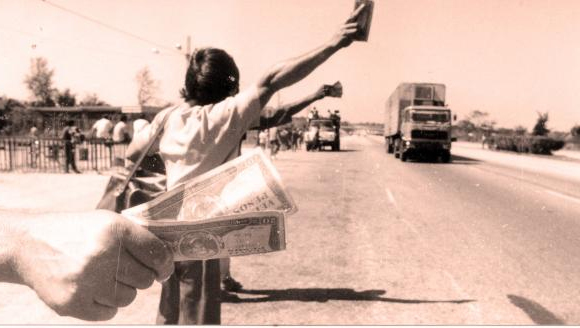
The experience of confronting the crisis in the hardest years of the special period revealed the importance of the comprehensiveness of the measures adopted, as well as their sequence.
Photo: Ahmed Velázquez.
This 2024 marks 30 years since the implementation of a set of measures that would begin to reverse the most serious effects of the crisis of the special period, which occurred between 1993 and 1994.
The basic ideas about the underlying measures to confront this crisis would be outlined in the speech given by Commander in Chief Fidel Castro Ruz, on July 26, 1993, and would characterize the economic policy in that period.
In that speech he would point out how,
in 1993, the country had lost 450 million dollars due to the drop in sugar production,
which would only reach 4,280,000 tons.
Additionally, the extent to which export prices of nickel, shrimp and lobster had been reduced, and the serious shortage of foreign currency that was being faced, would be analyzed.
Added to the above, in March, was the impact of the so-called Storm of the Century, which left more than a billion dollars in losses.
All of this led to the need to immediately adopt a set of bold, yet well-considered measures by the country's leadership.
This set of decisions gave way to the decriminalization of the possession and use of currency in the country – including the receipt of remittances from abroad – and its commercial capture through a system of currency collection stores (TRD), at the same time that permits for visits to Cuba by the Cuban community abroad were expanded.
Likewise, the need to expand foreign investment and adopt measures to reduce excess liquidity in the hands of the population
was reported .
Thus, an economic strategy began to materialize aimed at advancing the recovery, and resisting the impact of the crisis at the lowest possible social cost, while steps were taken to reinsert the Cuban economy into the new conditions, counting on the political consensus essential to it.
However, in the context of the measures adopted, due to its importance and urgency, the need to stop the internal financial imbalance was highlighted, which reflected an inflation rate that reached an estimated maximum of
183%
in 1993, which threatened with moving towards a process of demonetization and total disorganization of economic activity.
The creation of Cadeca contributed to connecting and regulating the flows of the different currencies in the hands of the population.
Photo: Endrys Correa Vaillant.
This situation was addressed in detail in the second ordinary session of the National Assembly of People's Power, on December 28, 1993, in which the critical internal financial situation was evaluated and the need to discuss it with the entire population.
This massive discussion of the measures that should have been adopted marked a substantial difference with the neoliberal programs that had been implemented massively in underdeveloped countries since the late 1980s, and gave real content to socialist democracy in our country, against to the recipes of capitalism.
This is how the so-called Workers' Parliaments were developed, between January and March 1994, a process of free and open discussion of economic issues, not only among workers, but also with the participation of peasants, students and - in general - of all the mass organizations existing in our country.
In these discussions,
more than 530,000 proposals were registered, in meetings that covered all provinces.
From these, those that had the greatest understanding and support from the population were selected, which served to design the measures that were presented to the National Assembly of People's Power, in extraordinary sessions, on the 1st.
and May 2, 1994.
At that assembly, an anti-inflationary program was approved that adopted the name of the Internal Financial Sanitation Program, which included systematically reducing the subsidy for company losses and other budgetary expenses, and increasing tax revenues;
achieve stability of savings;
control the circulation of currency in the country;
introduce stimulus mechanisms – in foreign currency – for workers who worked in strategic productions;
evaluate and decide, promptly, the increase in prices and rates of selected products and services;
gradually implement a new tax system;
examine the convenience of a currency change, as an element to take into consideration, in the event that the measures to be applied did not give the expected results in the short term, and empower the Government to adopt other measures that were considered for the financial consolidation of the country.
Something notable about these measures – which involved increases in prices and tariffs, as well as new taxes – was that
they had a political support process that allowed them to have the necessary consensus for their application
, even when they were harsh measures, in the midst of one of the worst years of the special period.
Additionally, in 1994, the rationalization of expenses of the Central State Administration was applied, with the reduction of ministries, which went from 50 to 30, and also, between 1995 and 1996, a business resizing process was implemented, which allowed its gradual reorganization, and that it had unemployment insurance that made it possible to mitigate the impact that this process would have among the affected workers.
The most important measures adopted since then, and that would complete the push for essential economic resuscitation, would include the approval, in the summer of 1994, of
Law No. 73, which implemented a new tax system;
the creation of the Cuban convertible peso (CUC), in December 1994, and of the Exchange Houses (Cadeca), in October 1995;
the approval, in September 1995, of Law No. 77, which provided an appropriate legal framework for foreign investment;
Decree Law No. 172 and 173, of 1997, which restructured the national banking system, and No. 187, of 1998, which would implement the business improvement process, among the most important decisions.
The experience of confronting the crisis in the hardest years of the special period revealed the importance of the comprehensiveness of the measures adopted, as well as their sequence.
Thus, the confrontation with inflation came to the fore;
followed by the encouragement of the most important productions;
the ordering of the partial dollarization of the economy, with the creation of the CUC, and finally the creation of Cadeca, to connect and regulate the flows of the different currencies in the hands of the population.
At a time when we are facing a complex situation in our economy, the study and critical assessment of what was done in the 90s has, without a doubt, notable usefulness for the present.
(Taken from Granma)