 Home
Home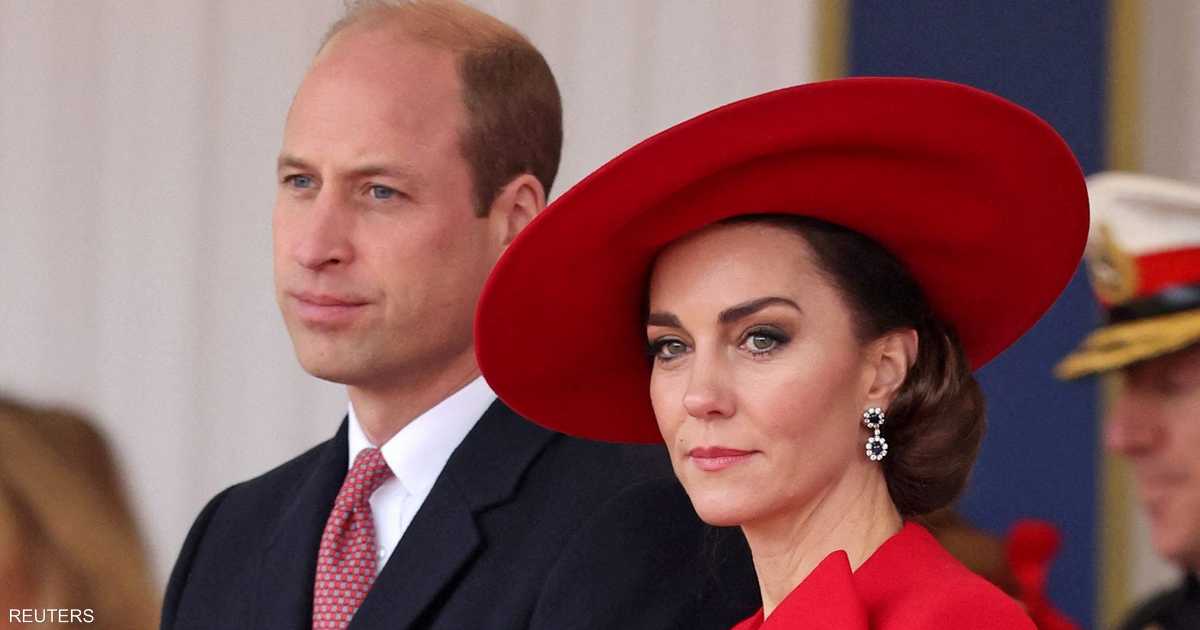
According to the American New York Times, a Kremlin-linked group known for its online campaigns to sow lies helped “fuel the frenzy of conspiracy theories” about Kate and her health before announcing that she had cancer.
Martin Innes, a digital disinformation expert at Cardiff University in Wales, said he and his colleagues tracked down 45 social media accounts that posted false claims about Kate, belonging to a disinformation network linked to the Kremlin, which had previously spread divisive stories about Ukrainian President Volodymyr Zelensky, as well as support for the Kremlin-linked disinformation network. France to Ukraine.
Professor Innes said: “The disinformation campaign appeared to inflame divisions, deepen a sense of disarray in society, and undermine trust in the British royal family and the media. The story was actually couched in conspiracy terms, so it could appeal to people.”
The newspaper said that the Russian accounts wanted those rumors about Kate's disappearance, which had been a popular topic on social media sites, to stimulate their access and gain more followers.
It is not clear who hired the disinformation network to spread news about the Princess of Wales, but it has a track record of campaigns to target countries and people at odds with the Kremlin.
For its part, the London Daily Telegraph newspaper reported on Sunday that British officials are concerned that Russia, China and Iran are feeding misleading information about Kate Middleton in an attempt to destabilize the country.
In 2020, a British parliamentary committee concluded that Russia had waged a prolonged and sophisticated campaign to undermine British democracy, using tactics ranging from disinformation, election interference and money diversion. The Russian Foreign Ministry rejected these conclusions, describing them as "Russophobia."
Kensington Palace, where Kate and her husband, Prince William, have offices, declined to comment on Russia's role in the recent rumours.
The palace appealed to the media and the public to grant the princess privacy, after she announced that she had cancer in a video clip last Friday.
Misleading posts
Professor Innes said his team noticed a mysterious spike in a certain type of social media post on March 19, a day after a video emerged of Kate and William leaving a food store near their home in Windsor.
One widely repeated post on X showed an image from the video, with the question: "Why do these big media channels want to make us think it's Kate and William? But as we can see, they're not Kate or William."
Innes explained that by tracking the 45 accounts that recycled this post, researchers found that they all originated from one main account named “Master Firs,” adding that they bore the characteristics of a Russian disinformation operation known as “Doppelgänger.”
On the same day, a false report about the death of King Charles III began circulating on Telegram, a popular social media network in Russia.
These reports were later picked up by Russian media, forcing the British embassies in Moscow and Kiev, the Ukrainian capital, to deny them as “fake news.”
“Such campaigns are particularly difficult to measure, because social media companies have restricted access to Data that would allow researchers, journalists and civil society groups to take a more detailed look at the spread of material on their platforms.”
On the other hand, Rasmus Kles Nielsen, director of the Reuters Institute for the Study of Journalism at the University of Oxford, said: “When the motives are political, the goal is rarely persuasion so much as attempts to undermine people’s trust in the media environment.”