 Home
Home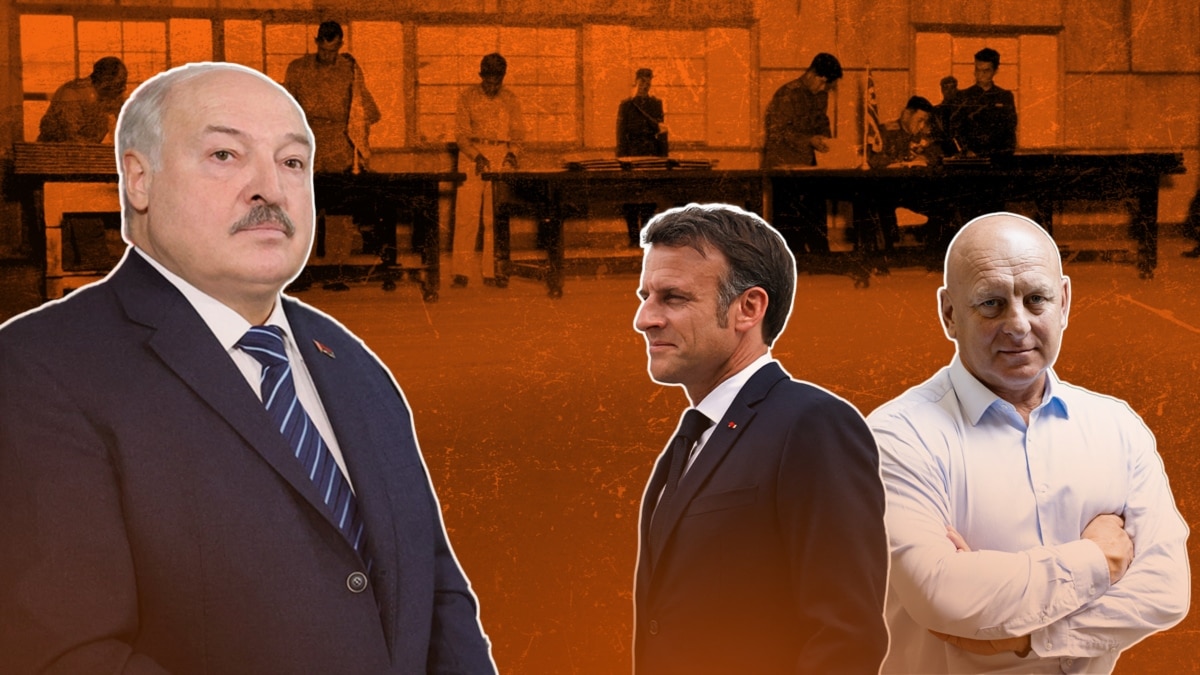
It is in this context that the high-profile statements of recent times should be considered: about plans for a Russian nuclear strike and "blitzkrieg on Vilnius", as well as about the possible entry of NATO troops into the territory of Ukraine.
Briefly:
Putin, who had been thinking and planning his military adventures for a long time, initially clearly counted on the West's unwillingness to fight, on the "spoiledness" of Europeans, who do not want to leave their comfort zone and therefore easily succumb to blackmail;
Intimidation against the West is an attempt to persuade it to negotiate, a manifestation of Putin's secret desire to create a new "Yalta" for the world, where, like Stalin in 1945, he would sit at the same table with the leaders of the world's powerful states and re-divide the European a continent in the sphere of influence;
Putin's belief in NATO's indecisiveness and inability to fight became one of the main drivers of aggression against Ukraine and plans for the next new division of the world;
Today's assurances of Lukashenka about the absence of aggressive intentions in relation to the Western neighbors sound no more convincing than his similar statements on the eve of the Russian invasion of Ukraine in 2022;
The experience of the Korean War in the early 1950s shows that even direct combat clashes between Russian and American soldiers are not insurmountable "red lines".
Are the Russian and Belarusian generals really preparing a military operation in the direction of Vilnius, Lithuania, as the representative of the United Transitional Cabinet,
Valer Sahaszczyk,
said recently ? And how likely can we consider the scenario voiced after President Macron's statements by the Ukrainian deputy Oleksiy Honcharenko, according to which French and other European troops may soon appear on the Ukrainian-Belarusian border? Many considered it just self-publicity, an attempt to draw attention to their own persons and increase their political capital on a hot topic. But is that all there is to it?
SEE ALSO: Sakhashchyk: The authorities of Russia and Belarus are preparing to use nuclear weapons and "blitzkrieg on Vilnius"
Who will scare who more
Sometimes it seems that the outcome of this war now depends on who scares whom more, who "blinks first", unable to withstand the tension... An old game in which
Putin
was considered a virtuoso, an unsurpassed master until recently. But the West is also learning. Draws conclusions, learns experience. He understands that this clearing cannot be left only to Putin and Lukashenka. And the sensational statement of French President
Macron
, made by him after the meeting with the leaders of the European Union countries at the end of February (that he does not rule out the deployment of European troops in Ukraine), is from the same series.
French President Emmanuel Macron. Paris, February 2024
What is remarkable is that the topic gradually develops, acquires new details and outlines.
"I am in contact with my French colleagues. And now I can say that everything is serious. There are talks about a mission of European soldiers on the border with Belarus, which will free the Ukrainian military from that direction. This will allow us to strengthen the eastern and southern directions," said the deputy of the Verkhovna Rada of Ukraine
Oleksiy Honcharenko in his Telegram channel recently.
This information significantly clarified Macron's statement. Now, what at first looked improbable and almost fantastic, acquires completely new and realistic outlines. According to Honcharenko, France is going to create a coalition of allies (mainly Poland and the Baltic countries), which will send a united military contingent to Ukraine. But it is planned to use it not directly at the front, but in the regions bordering Belarus, as well as at training bases and training centers for military specialists.
SEE ALSO: "Where is the world going?" Is France able to lead the West
Voices of indignation were immediately heard in Moscow, there was talk of "red lines" again. They started threatening with a nuclear club again. Unexpectedly, the news about the high probability of a nuclear attack and "some kind of blitzkrieg on Vilnius" came from the side that was not expected: from the representative of the United Transitional Cabinet, Valer Sahashzyk, during his public speech at the Freedom Day rally in Warsaw.
Valer Sakashzyk
Moreover, Sahashchyk assures that he received the information "from the most reliable sources." It is quite likely that the sources are really authoritative, with many general stars on their shoulders. But where is the guarantee that the "fluff" (even from the General Staff) is not a targeted operation, designed to intimidate a potential enemy? And Sakhashchyk was chosen to voice the "horror story" only because the threat sounded more convincing from his mouth.
And pay attention to the apocalyptic picture
Lukashenko
described for the West and Ukraine a month ago, on February 25.
They say, "In Russia, the armed forces have developed, they are producing a huge amount of weapons..."
"If you don't start negotiations with Russia now, they will completely lose Ukraine."
“Stop now. There is a possibility to come to an agreement... If the West will help Ukraine as much as it is now, then its days are numbered."
Everything leads to the conclusion: what Lukashenka has been voicing lately is primarily threats to the West, an attempt to persuade it to negotiate, and the voice of Putin's secret desire to create a new "Yalta" for the world, wherever he is, just like Stalin in 1945. m, would sit at the same table with the leaders of the world's powerful states and divide the European continent into spheres of influence.
SEE ALSO: Lukashenka reacted to Sakhashchyk's statement about the plans of Belarus and Russia to attack Lithuania
"Germans and Americans will flee the battlefield at the first serious situation"
Putin, who conceived and planned his military adventures, initially clearly counted on the West's unwillingness to fight, on the "pampering" of Europeans, who don't even want to think about trenches, about getting out of their comfort zone, breaking their usual way of life, die somewhere on the edge of the continent for someone else's interests. These motives were not only constantly heard and heard in official propaganda - Lukashenka has been rebroadcasting them all the time, since 2021. Let's recall how humiliatingly and mockingly he spoke about the combat capabilities of Europeans in an interview with the propagandist
Kiselyov
on November 30, 2021, three months before the Russian invasion:
"It will be easier in Europe... If they deploy there and send some troops here, we will already be standing near La Manche."
Dmitry Kiselyov
In general, Lukashenka sounds this note quite often. Let's pay attention to how he spoke about the NATO soldiers, inspecting the Belarusian military units near the border with Lithuania on March 26:
"There are now 120,000 Ukrainians on the Ukrainian side. They want to take them away, throw them to the front against Russia. And here the talks are about deploying French or NATO troops on our southern border. It's good for us. They will not protect Ukraine the way Ukrainians are protecting it now."
At the same time, he immediately made a reservation: "We are not going to fight against them. We don't need it." So if we are "not going", then what is the "good" for Russia and Belarus from the fact that non-Ukrainians will be there?
What is remarkable: Lukashenka has a similar opinion about German and American soldiers:
"What, do you think that the Germans and Americans came here and in the event of a collision with Belarusians and Russians, they will defend Lithuania? Yes, this has never happened. And they will not protect. At the first serious situation, they will run away from the battlefield. And they will do it right. Their land is in Germany and the USA. No hirelings here will solve the issue."
Alexander Lukashenko with his dog at the landfill near the Lithuanian border, March 26, 2024
Lukashenka allegedly denies aggressive intentions towards the neighbors, and assures that no, we will not attack under any circumstances. But it sounds more like a hidden threat. And how to appease Putin. They say, even if we attack, none of them will seriously defend Lithuania (or Ukraine) - they will run away.
There is no faith in these assurances. The whole world already heard from him on the eve of the Russian invasion that "there will never be any aggression against Ukraine" from the Belarusian land and that "no invasion is planned - these are just exercises."
Lukashenko is clearly voicing what he heard from Putin. And isn't this motive — the belief in NATO's indecisiveness and inability to fight — one of the main drivers of Putin's aggression? Like, which of them are warriors - they will immediately run away from fear, you just need to hit them. To what extent Lukashenko himself is a prisoner of these stereotypes is a difficult question. In each case, he repeats over and over again what Putin likes to hear, which fits perfectly into the latter's picture of the world.
SEE ALSO: The threat of a possible armed attack by Russia is taken seriously in Poland - analyst Potocki
Blurred "red lines"
Today, in the third year of the great Russian-Ukrainian war, it is more and more obvious that the "red lines", which supposedly should not be crossed by either side, are increasingly blurred, becoming imaginary. And none of the darkest scenarios seem improbable.
Sometimes you can hear that the world has never experienced anything like this, and the current situation is extraordinary, that any direct armed conflict between the Russian and NATO troops will immediately cause catastrophic consequences, and therefore cannot be allowed under any circumstances. But is it really so?
Not so distant an episode of world history: 70 years ago, Soviet and American pilots looked at each other through the slits of their sights. They fought and beat each other. The confrontation was the most direct. And the world was also on the brink of nuclear war. But somehow they got out of that situation. How was it?
SEE ALSO: He confused both his own and others. Why is Lukashenko coquettish about his participation in the 2025 elections?
The pilot Lee Si Ching is in a Korean uniform and speaks Razan
70 years ago, the world was shaken by the Korean War. Formally, it was fought between the communist North and the capitalist South of the Korean Peninsula. Although in fact it was a clash between the USSR and China on one side, and the USA and a broad coalition of countries, most of them democratic, on the other. And the matter then was not limited to the supply of weapons and ammunition. The totalitarian regime
of Kim Il-sung
would clearly have been doomed to defeat if it had not been for the effective participation of the Stalinist USSR on its side.
A woman mourns her father, who died during the Korean War of 1950-1953. Pyongyang, July 25, 2013
According to the now declassified information, about 70,000 Soviet soldiers (mostly pilots and service personnel of the Air Force) participated in the Korean War. At the same time, Moscow, fearing a direct confrontation with the USA, tried to pretend that the pilots were not Soviet. A regime of secrecy was introduced. Soviet aircraft were prohibited from flying over the Yellow Sea and flying south of the 39th parallel. Participant of the Korean War, Soviet pilot Yevgeny Pepyalyaev later recalled:
"I had to fly with Korean identification marks and in a Chinese uniform.
Kazhadub
(one of the Soviet aces, three times Hero of the Soviet Union) personally selected pilots who either had front-line experience or had mastered the advanced MiG-15 jet fighter at that time. Soviet pilots who participated in the battles were changed into the uniforms of Chinese volunteers, Chinese names and surnames such as Xi Ni Ching or Li Si Ching were written into the documents, and the MiGs displayed Korean identification marks..."
Soviet MiG-15 aircraft that took part in the Korean War
This whole conspiracy was sewn with white threads: the "Chinese" pilots communicated and cursed on the radio exclusively in Russian. And they were shot down more than once: during the whole war, according to various estimates, from 335 to 700 Soviet planes were lost, more than 100 pilots were killed. Nevertheless, in the West, this staging was looked upon condescendingly. It did not lead to an armed conflict between the two superpowers, nor to nuclear bombings (although there were such fears and intimidation).
A woman mourns her father, who died during the Korean War of 1950-1953. Pyongyang, July 25, 2013
In general, the scale of that war was, in a certain sense, much larger than the current Russian-Ukrainian one. The number of troops on each side exceeded 1 million people. The number of victims is estimated at 3 million. Mass war crimes were recorded on both sides: executions of civilians, torture and murder of prisoners of war...
SEE ALSO: "God helped Belarus in 2020, otherwise there would have been war." "Orthodox atheist" Lukashenko explained why "no one will save him"
Dim outlines of two Ukraines
There is a version that Stalin considered the war in Korea in the context of his planned big war with the USA. It is known that the commander of the UN forces in Korea, General
Douglas MacArthur,
proposed to use nuclear weapons against China in order to quickly break the enemy's resistance and preserve its manpower. How the events would unfold in such a case, one can only guess. In any case, the world stood on the threshold of the Third World War no less than now.
But then somehow it shook... The last two years the war was mainly a positional one: the sides were weakened, the available resources for a decisive victory were clearly not enough for either side. And on March 3, 1953, the then "black swan" suddenly arrived:
Stalin
died . Shortly thereafter, the Presidium of the Central Committee of the CPSU voted to end the war. Already on April 20, 1953, the first exchange of prisoners of war took place, and on July 27, an armistice was concluded. After that, the formerly aggressive USSR took a course for "peaceful coexistence with the capitalist environment" and "de-escalation of international tensions."
The capital of South Korea, Seoul, 2020
As a result, neither side won. The great powers agreed to a compromise. Korea remained divided (and to this day this division remains: formally, the war is still not over). Whose socio-political system won, whose side was the historical truth, can be clearly seen by the way Koreans live on different sides of the 38th parallel. On one side - high-tech economy and prosperous modern society, on the other - brutal totalitarianism, militarized society and periodic outbreaks of hunger.
North Korean leader Kim Jong Un leads a military demonstration, March 13, 2024
In some ways, that war resembles today's Russian-Ukrainian war. And who knows, whether the dim outlines of the future two Ukraines are not already visible in the smoke and fires of this war, which is clearly reaching a stalemate?...
The opinions expressed in the blogs represent the views of the authors themselves and do not necessarily reflect the position of the editors.
SEE ALSO: Artem Shreibman about the war, the terrorist attack in "Crocus" and a possible way of change in Belarus
Secure communication
with our editors
HERE