 Home
Home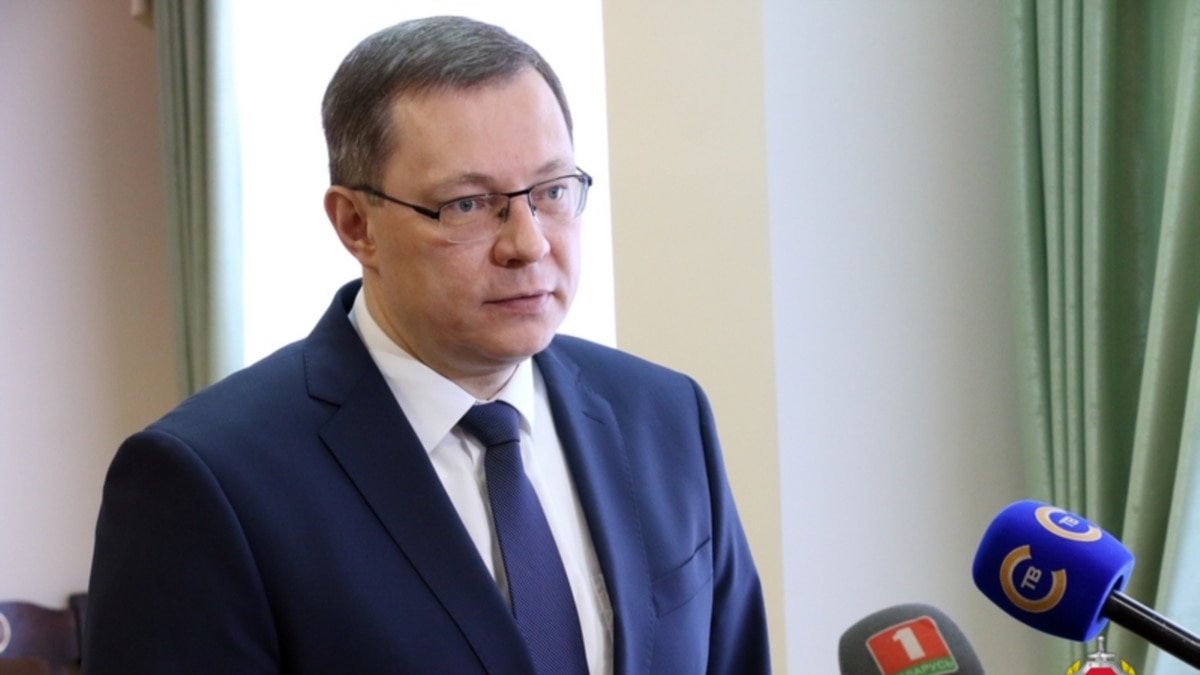
Prosecutor General of Belarus Andrey Shved said on March 26 that the Prosecutor General's Office of Belarus is preparing legal proceedings in relation to 5 more dead people who are accused of "genocide of the Belarusian people during the Great Patriotic War".
He noted that the recent conviction of Vladimir Katruk, who died in 2015, is "a precedent that does not exist in any country in the world."
"Today we are preparing materials related to at least five convicts, including our collaborators, including Serafimovich, who was such a sadist who from 1941 to 1944 destroyed the civilian population, his fellow citizens, and other convicts.
And the judgments of these courts will be made public," said Shved.
In July 2023, Lukashenka signed the law "On Amendments to the Criminal Procedure Code", which allows criminal cases to be opened against the deceased and sentencing them according to 10 articles of the Criminal Code (among them are genocide, ecocide, international terrorism, preparation or waging of an aggressive war, use weapons of mass destruction, other war crimes).
The General Prosecutor's Office of Belarus started an investigation into the criminal case about the genocide of the Belarusian people during the Second World War in 2021, then a separate case of Vladimir Katruk appeared.
On March 18, 2024, the Supreme Court of Belarus issued a verdict in the first case against the deceased person: it found
Uladzimir Katruk
guilty of genocide (according to Article 127 of the Criminal Code).
In connection with the death of the accused, the sentence was pronounced without announcing the punishment.
Earlier, during his lifetime, Katruk's case was considered in Canada, but as a result, it was declared that there was a lack of evidence.
Uladzimir Katruk was accused of the fact that, acting on the instructions of German officers, he and other fighters of the auxiliary forces of the German police of the 118th battalion of the Schutzmannschaft drove the residents of Khatyn from their houses, drove them to a barn on the outskirts of the village and stuffed them into it, and then set fire to the thatched roof .
People who tried to escape from the fire were shot by the SS.
As a result, 149 civilians were killed, including 75 minors.
In 1944, Katruk deserted from the German army and joined the French Resistance movement, joined the French Foreign Legion and got to the front of the fight against the German army.
After the war, he lived in Paris.
In 1951 he emigrated to Canada.