 Home
Home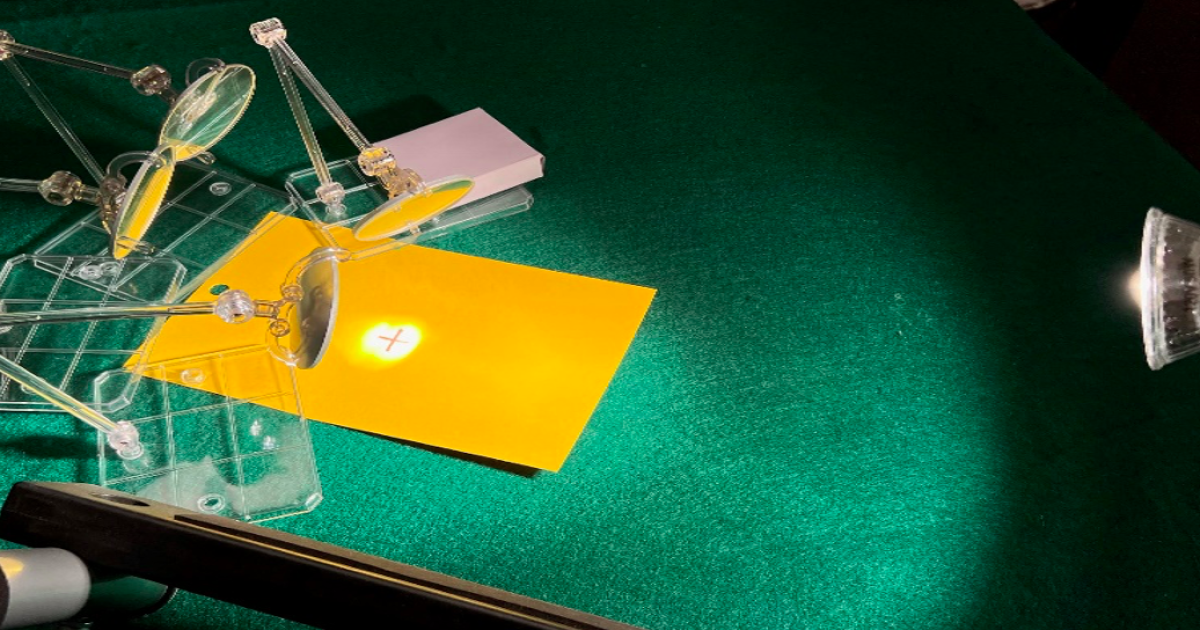
A 12-year-old boy has helped resolve a centuries-old controversy about the "death ray" created in ancient Greece by Archimedes.
Ladbible.com writes about it.
Archimedes of Syracuse, who was born in 287 BC, is considered one of the greatest mathematicians of all time. He was not only good at numbers, but also a gifted inventor, engineer, physicist and astronomer.
And, according to Lucian of the 2nd century AD, Archimedes was also the inventor of the "death ray" used to fend off Roman warships during the siege of Syracuse in 213-212 BC.
Archimedes is said to have harnessed the power of sunlight through mirrors, which were then directed at approaching enemy ships, setting them on fire as a result.
However, since it all happened so long ago, there is no conclusive evidence that the "death ray" worked. This has been debated for centuries, with some experts insisting that a "death ray" never existed.
However, a Canadian schoolboy named Brendan Sener managed to make a big breakthrough in the debate by creating his own, toned down version of the "death ray" using mirrors and table lamps.
His experiment, which used 50-watt LED lamps, was able to prove that such a "death ray" could potentially work.
1 - Infrared thermometer, 2 - Clamps, 3 - Heat lamps (50 W, 100 W), 4 - Concave mirrors (four), 5 - Target, 6 - Thermometer stand, 7 - 3 minute timer / Photo: Canadian Science Fair Journal
Sener found that by focusing the light of his lamps on a piece of card, he could increase the temperature by 2°C for each additional mirror he added – up to a maximum of three mirrors – and adding a fourth mirror resulted in an 8°C temperature increase.
Likewise, if he used 100W bulbs, he saw a 4°C increase in temperature with each additional mirror, up to three mirrors, with the fourth mirror increasing the temperature by 10°C.
Death Ray / Photo: Canadian Science Fair Journal
Sharing his findings in the Canadian Science Fair Journal, the child wrote: "This series of experiments has shown that the principle behind Archimedes' 'death ray' is certainly possible, and so I accept my original hypothesis that concave mirrors can be used to reflect and concentrate the light emitted by a light source. As the number of reflecting mirrors increases, so does the temperature of the target."
He added: "However, in order for it to function properly and cause large objects such as wooden ships to burst into flames, it would require a very powerful light source and many large mirrors. Historical accounts of the use of the 'death ray' in ancient Syracuse are plausible, however, no archaeological evidence of Archimedes' "death ray" has been discovered, except for what is recorded in the books of ancient philosophers."
It will be recalled that a Roman military base was excavated
in the valley of the biblical "battle of the end of the world"
. The camp of the Roman legion served as a permanent military base for Roman soldiers.