 Home
Home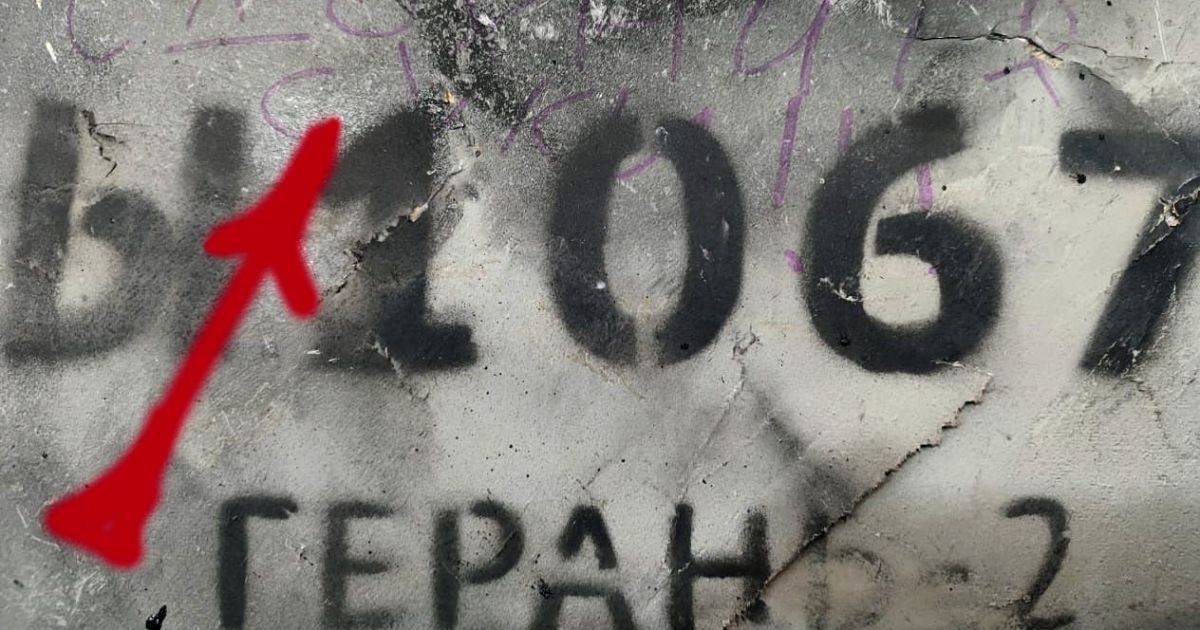
The Russian occupation army had its first contract, which provided for the supply of Shahed-type unmanned aerial vehicles from the territory of Iran. After that, they set up their own production themselves – it is already operating in Russia, in particular in Yelabuga. At least two production lines have been deployed there today. But for the most part, the components come from other countries.
Vadym Skibitskyi, a representative of the Main Intelligence Directorate of the Ministry of Defense, said this in an interview with RBC-Ukraine.
"In December, there was the most massive use of Shahed-type unmanned aerial vehicles (in Ukraine - ed.). If I'm not mistaken, in December, the enemy used about 770-780 of these attack UAVs. We are talking only about those that have been recorded by us. After all, there is still a certain percentage – approximately 4% – of those that do not fly, did not start or exploded immediately after launch. We have confirmed data from the Russian side that such cases also occur," he said.
According to Skibitskyi, today Moscow has managed to establish the production of a glider – the body of these UAVs. Russia is already producing them on its own. However, more spare parts and parts are now coming from other countries, that is, everything is not limited to Iran.
"Our assessment is that the Russian Federation is capable and it is already producing or assembling unmanned aerial vehicles on its territory. This is evidenced, firstly, by the fragments that we find after enemy attacks. Secondly, if we talk about the engines in the Shaheds, then earlier they were a maximum of two different companies, but now we are talking about at least 3-4 different companies, including Chinese ones," the representative of the Main Directorate of Intelligence said.
Moscow's goal is to reach a full, closed cycle of production of such UAVs in Russia by 2026.
"I am not sure that they will be able to replace or find a Russian analogue, for example, of an electronic database – microcircuits, chips, etc. But the Russian Federation is capable of producing starters, hull, warhead, engines, and other elements of the navigation system today," Skibitsky said.
According to Ukrainian intelligence, the Russians can produce (as many as they did in December, for example) 330-350 units of these UAVs. But it depends on whether there are parts, because, for example, there may be hulls, warheads, but no engines.
"We collected what we could and are waiting only for the engines. Engines have arrived, and, accordingly, the number of finished products will increase, there will be more than 300 of them. But, as in the case of missiles, all Shaheds or so-called Geran-2s that are manufactured are immediately used for combat use. And that's why we see a different number of drones used. December showed that even if the enemy had some stocks, they are currently running out, and all these launched UAVs literally come from the assembly line," Vadym Skibitskyi summed up.
To recap, the Main Directorate of Intelligence named the volume of ammunition that Russia receives from the DPRK.