 Home
Home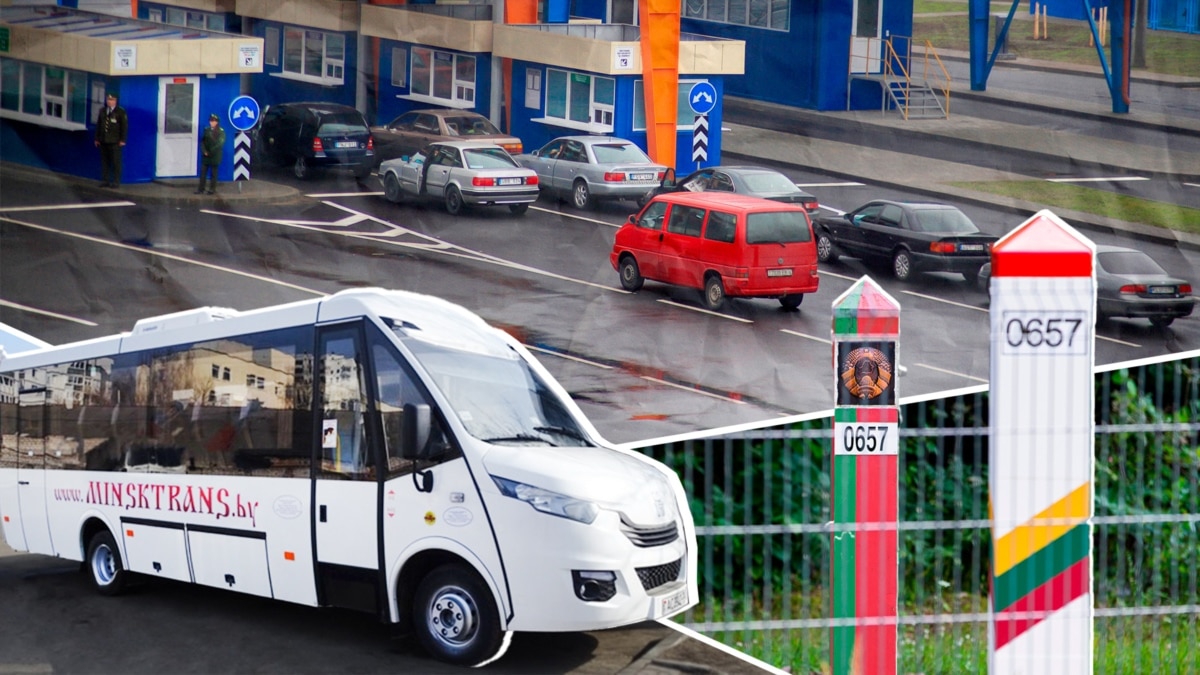
A series of changes at the border
Over the past month, Belarusians traveling to Poland or Lithuania have encountered a number of changes. This year, on March 1, Lithuania closed two more border crossings, including the one popular with Belarusians in Privalka, near Horadnaya. As a result:
bus and shuttle routes have changed;
some directions have disappeared (for example, in Druskeniki);
ticket prices have risen (on average by $10);
it has become more difficult to buy tickets, because they are sold out faster,
other transitions with the European Union have become more congested.
In the last week of March, it became known that Poland stopped producing cars with an engine capacity of more than 1.9 liters from the European Union, according to other information - more expensive than 50,000 euros with any engine capacity. Behind Poland, Latvia took a similar step. The probable reason is that the countries of the European Union want to limit the export of elite cars, which were converted to Russia.
Passport check at the Belarusian-Polish border
Recently, according to Svoboda's interlocutors, the number of cars brought from Europe to Russia has increased in order to make it to April 1, because then Russia will impose a large duty on the import of cars that have passed customs clearance in the European Union.
Another change is that from April 1, the standards that can be imported into Belarus from the European Union without customs clearance for personal use will be reduced: instead of 31 kilograms, there will be 25 kilograms, instead of goods worth 1,000 euros - only 500. They wanted to take such a measure a few years ago. but every time they postponed the decision. It is expected that the queues will decrease from April, as it will become less profitable to transport goods to Belarus. You will have to pay 4 euros for each extra kilogram or 30% of the excess value.
It took 22 hours to drive from Hrodna to Bialystok with extra speed
Belarusian
Irina
* (the names of all interlocutors have been changed for their safety. — RS) traveled from Hrodna to Bialystok on the appropriate bus through the crossing in Brest in March. The trip was on the eve of the weekend. When they drove up to the border, they saw about 30 buses standing in front of them.
The woman got out of her bus and walked to those who were near the border. She paid for the ticket once again, already to Warsaw. It was no longer possible to hand in the previous ticket and get the money back. In Warsaw, she took a bus to Bialystok. The whole road took 22 hours. According to her calculations, she saved a day that she could have stayed at the border if she had not moved.
It has become a common practice to get off your bus and transfer to the one closer to the border when there is a long queue. The "AvtaHrodna" portal reported how the city carriers came up with the idea to save passengers' time without an additional bus ticket. An empty bus takes a queue at the border. If a bus of the same company arrives at the "tail" of the queue, passengers transfer from the last bus to the one in front. The one in the "tail" remains empty waiting in line to repeat the trick with passengers later.
Many Belarusians also drive up to the Warsaw Bridge in Brest, then walk to the border and look for a seat on the buses closest to the border.
Belarus
Mikhal
drove from Bialystok to Minsk via Brest by car on a weekday in March. The whole trip took about 19 hours. He checked the length of the queue online and watched when it would be the shortest.
Emilia
from Belarus
decided that it is more convenient for her to travel not by direct flight, but by connecting flights. At the weekend, she traveled from Bialystok to Minsk with a transfer in Vilnius. She left for Vilnius in the evening. She was there five hours later. Another hour and a half later, I got on the bus to Minsk via Kamenny Log. In the morning I was in Minsk. The whole trip took about 10 hours. She traveled from Minsk to Bialystok in the same way with a transfer in Vilnius on a weekday. The total travel time was 12-13 hours. They stood at the border for about 5 hours each time. One-way tickets cost approximately 55 dollars.
"Buses pass like this: four regular, one tourist"
Adele
traveled from Minsk to Warsaw in March via Brest on a regular bus on a weekday.
"I don't drive anymore. I had enough! Even before the border was closed (two Lithuanian crossings. — RS) we stood at Kamenny Log for 9 hours," she recalls.
Traveling by direct bus from Minsk to Warsaw is not as comfortable for her as with transfers. A Belarusian woman first travels from Minsk to Brest by train. It takes 3 hours and 20 minutes. She takes a place in a platform or compartment for 20 rubles and sleeps during the journey. In Brest, he has a short break between transport and then gets on a bus to Warsaw.
"Buses that go straight to Warsaw are too long for me. It takes five hours by bus just to the border. I have time to go crazy. And so I get on the bus fresh," comments Adele.
She notes that you should find out whether you are buying a ticket for a tourist bus or a flight ticket. It's not always obvious. Flight tickets have priority, they can be skipped before tourist tickets.
"Buses pass approximately as follows: four regular buses, one tourist bus. Sometimes, when the line is too long and slow, people go and ask to at least skip the tourist one after three flights," says the interlocutor.
She noticed that the bus was leaving the Brest bus station half empty. If they were close to the border, then it was already filled with those who board just before the border crossing.
They stood at the border for 13 hours. The Belarusian woman is already used to standing in such queues for a long time. Trying to occupy himself at this time.
"It's not scary for me anymore. This is part of my life. I don't treat it as a massacre, but as a situation. We are standing on the border, you can live your life, just not at home. I take my work with me. I take my 10,000 steps along the bus, I walk here and there when the weather is good," she says.
She did not notice that the situation with the border crossing has changed a lot over the last month.
"Standing for 30 hours has happened before, standing for 15 hours has happened before. If you crossed the border in 7 hours, what you are going through is a very cool time," she thinks.
She advises Belarusians who plan to travel between Belarus and the European Union to think of things to do while waiting at the border.
"Plan that you will have 12 hours of free time. We need to make a living. We need to give ourselves tasks: I will go to the right, see what is there, I will go to the left and look. I'll see what's on the bus, I'll meet someone, we'll talk. Read, look at the phone, check where the best toilets are," advises the interlocutor.
Once she saw how people were fighting at the border through an empty bus that was standing in front and no one else was allowed through it. Another interlocutor of Svoboda, Michal, explains that such people can be understood. People can fight when additional cars are allowed to queue in front of them.
"They are on their nerves, they need to be on time for work. For example, they work in shifts at the factory and, if they do not have time to cross the border, they cannot take the next day off. And they still want to rest, spend time with their family," Michal thinks.
Adele says that if she leaves Minsk by train late the night before, then, most likely, she will reach Warsaw before 17:00 the next day. If she leaves Minsk early, she will be in Warsaw around midnight the same day. The whole road takes her about 20-24 hours on such trips.
On the road from Minsk to Warsaw, she spends up to 110 rubles (20 for the train to Brest) and 75-90 rubles (for the ticket to Warsaw). This price has not changed after March 1. But she noticed that the tickets for direct flights from Minsk to Warsaw via Lithuania increased by 30 rubles: from 120 to 150 rubles. According to her observations, it is now more difficult to buy a ticket for flights going to the European Union via Lithuania, because their number has decreased.
"Drugs, tranquilizers?"
Alena,
a Belarusian
, traveled from Hrodna to Bialystok by bus on a weekday in March. She drove to the border in Brest by car to catch a bus there. Before leaving, she checked that there were eight buses at the border. But when she got to the border crossing, there was no bus.
However, within an hour, she boarded a minibus that went from Hrodna. She paid 120 rubles for the ticket, as if she had been traveling from the very beginning. Until March, tickets from Hrodna to Bialystok cost 90-100 rubles. The whole trip took 9 hours. She says that an acquaintance of hers traveled by bus on a similar route, but on weekends, when there was a "business Sunday" in Poland, that is, shops were open (most shops in Poland are closed on Sundays). She was on the road for about two days.
Alena drove from Białystok to Hrodna by car via Benyakoni, also on a weekday. She spent 27 hours on the road.
She says that the Belarusian customs officials carefully checked the things. The customs officer asked everyone: "Drugs, tranquilizers?"
"He said it so monotonously. He had such a face that I didn't even want to joke back: "No, thank you." They shake everything. My suitcase was completely checked. One man was being taken somewhere. The car remained, then he drove the car from the passport control out of the queue, and he himself remained. So the interrogations are still going on," she says.
She admits that it is difficult to bear more than a day on the road. Sometimes it is possible to sleep a little. If necessary, people went to the forest on the Lithuanian side.
"Everything is clogged there. Papers, people throw garbage bags from cars. "When you go deep into the forest, you step over a minefield so as not to get your boots dirty," she says.
You could buy warm food in a cafe on the Lithuanian side. A 1.5-liter bottle of water cost 1.5 euros.
Alena believes that it will be easier to travel to the European Union from April, because traffickers will travel less frequently due to the restriction of norms. Now it will be unprofitable to transport all goods that cost more than 500 euros, such as most laptops. Weight restrictions will make it even more difficult to transport bulky equipment and furniture: washing machines, ovens, cabinets.
Secure communication
with our editors
HERE